One Tooth Sensitive to Cold but No Cavity? What It Means
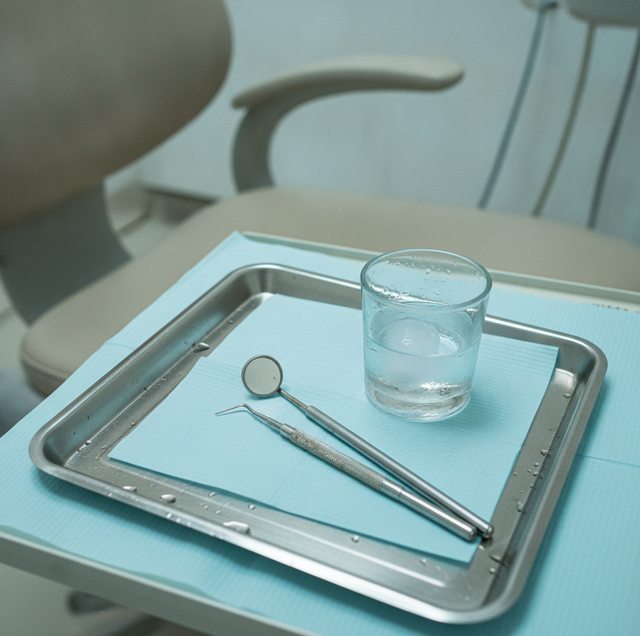
You tip a glass of ice water to your lips, and before you have even swallowed, one tooth answers with a sharp, bright zing. Not a dull ache. A quick electric jolt that fades almost as fast as it arrived. So you go back to your dentist half-expecting to hear about a cavity, and instead you get the opposite news: the tooth looks fine, the X-ray is clear, no decay. Which leaves the obvious question hanging in the air. If there is no cavity, why does this one tooth keep flinching every time something cold gets near it?
It turns out a tooth has plenty of ways to feel cold without a single spot of decay. Most of them come down to one idea: the cold is reaching the nerve through a shortcut that should not be open. Here is how that happens, and how to tell the minor version from the kind worth having looked at.
What Cold Is Actually Doing Inside the Tooth
The hard white outside of a tooth is enamel, and enamel has no nerves. Under it lies a softer, living layer called dentin, which is not solid. It is threaded with thousands of microscopic channels, called tubules, that run from the surface straight down toward the pulp, where the nerve lives. Each tubule is filled with fluid.
When enamel covers the dentin, those channels are sealed off, and you feel nothing. But when a patch of dentin loses its cover, cold has a way in. A cold sip does not chill the nerve directly. Instead, the sudden temperature change makes the fluid inside the tubules move, a quick rush in or out, and that tiny shift tugs on the nerve endings waiting at the bottom. The nerve reads that tug as a sharp, short jolt. That is why the pain is so fast and so specific: it is fluid movement, not a slow burn. Dentists call this the hydrodynamic effect, and it explains almost every no-cavity cold zing. The real question becomes: on this one tooth, what uncovered the dentin?
Gum Recession and Worn Enamel
The most common answer is that the dentin near the gumline got exposed. Enamel is thin down there to begin with, and two things thin it further. Gums can recede, pulling back and uncovering a slice of the root, which has no enamel over it at all, only a thin skin that wears off easily. And enamel itself can wear from years of acidic drinks, from a firm sideways scrubbing motion with the brush, or from a stiff-bristled brush used with a heavy hand.
Recession and wear tend to hit unevenly, so a single tooth that sits a little forward, or that you happen to scrub hardest, can end up with a bare patch while its neighbors stay covered. That is often why it is just one tooth, not the whole row. This kind of exposed-dentin sensitivity is usually the mild, manageable type, and a dentist may recommend gentler brushing and an over-the-counter sensitivity toothpaste as a first step.
Could It Be a Crack You Cannot See?
A tooth can develop a hairline crack that does not show up as decay and can be hard to spot, even on an X-ray. A crack opens a path for cold to slip past the enamel and reach the dentin and, sometimes, the nerve. The clue that points toward a crack rather than plain wear is the pattern: sensitivity that flares when you bite down on something and then zings again when you release the pressure, or a cold reaction that feels sharper than a surface twinge. This is what dentists refer to as cracked-tooth syndrome.
A cracked tooth is not something to diagnose or wait out on your own. Cracks range from shallow lines in the enamel that need nothing to deeper ones that keep spreading, and only an in-person exam, sometimes with a bite test or a special dye, sorts out which is which. If biting reproduces the zing, that is a reason to have the tooth evaluated rather than watched.
When an Old Filling Is the Weak Point
A filling does not last forever, and an older one can start to let cold through. The edge where a filling meets the tooth can wear, chip, or develop a microscopic gap as the materials age and the tooth flexes with every bite. Cold can seep into that seam and reach the dentin beneath, even though the surrounding tooth has no new decay. A metal filling can also conduct temperature more readily than natural tooth structure, so a large older one may transmit a cold sensation that the tooth never used to feel.
None of that means the filling has failed. It means the seal is worth checking, and a dentist can tell whether an aging filling is leaking at the margin or fine as it is, which you cannot judge by feel alone.
Grinding, Clenching, and the Notch at the Gumline
If you grind or clench, often at night without realizing it, you put your teeth under force far beyond normal chewing. Over time, that repeated stress can flex a tooth enough to fatigue the enamel right at the gumline, where it is thinnest, and chip tiny amounts of it away. The result is a small notch or wedge-shaped groove at the base of the tooth, a pattern dentists call abfraction, and it exposes dentin in exactly the spot cold likes to find.
Clenching can also leave a tooth generally tender and more reactive for a while. Because grinding tends to focus on certain teeth, it is common for the wear and the sensitivity to show up on one or two rather than spread evenly. A night guard is one thing a dentist may discuss to take the load off, but the grinding itself is worth confirming first.
When the Tooth Is Just Settling Down
If you recently had dental work on or near that tooth, a cleaning, a new filling, a crown, some cold sensitivity for a little while afterward is common and usually fades on its own over a few days to a few weeks as the tooth settles. The nerve inside can stay mildly irritated for a short time after being worked on.
What is worth flagging is sensitivity that gets worse rather than better over that window, a bite that feels tall or off when you close it, or pain that lingers well after the cold is gone. Any of those is a reason to call the office that did the work rather than wait it out, because a bite that sits a hair too high is a quick adjustment.
And Sometimes It Is Not the Tooth at All
Here is a curveball for the upper back teeth. The roots of the upper molars and premolars sit right up against the floor of the sinuses. When those sinuses get inflamed or congested, the pressure can press on nearby nerves and refer pain down into the upper teeth, which can read as sensitivity, including to cold, in a tooth that is perfectly healthy.
The tell is usually context: several upper teeth on one side feeling tender at once rather than a single tooth, sensitivity that tracks with congestion or a head cold, and a dull ache that shifts when you bend over or lie down. If cold sensitivity in an upper tooth shows up alongside sinus symptoms, mentioning that to your dentist helps them sort out a tooth problem from a sinus one.
Telling a Minor Twinge From a Signal
Not every cold zing means trouble, and part of the worry is not knowing which kind you have. As a general guide, a brief, sharp reaction to cold that stops within a second or two, with nothing lingering, tends to be the milder, exposed-dentin end of the range. The signs that lean the other way, and are worth a prompt look, are pain that lingers for many seconds after the cold is gone, pain when you bite or chew, a tooth that starts aching on its own without anything touching it, new sensitivity to heat as well as cold, or any swelling near the gum.
This is a rule of thumb for deciding when to pick up the phone, not a way to diagnose your own tooth. Only a dentist can look, test, and tell you what is actually going on with that specific tooth. If the sensitivity is new, changing, or paired with any of those warning signs, that is the moment to have it evaluated rather than to keep experimenting with which side you chew on.
Putting the Clues Together
A tooth that reacts to cold with no cavity behind it is almost always a story about exposed dentin: enamel worn thin, gums receded, a crack, an aging filling seam, a grinding notch, a tooth still settling, or a sinus doing the talking for an upper molar. The cold is not the cause; it is the messenger, tugging the fluid in tubules that should have stayed sealed. Which of those it is changes what, if anything, needs to happen, and that is not a call to make from the bathroom sink. Note when it happens, whether it lingers, and whether biting sets it off, then let a dentist match the clue to the cause.
Frequently Asked Questions
Usually not. A quick zing that fades within a second or two most often points to exposed dentin, which is the reversible end of the range. The picture that concerns a dentist more is different: pain that lingers for many seconds after the cold leaves, throbbing that starts on its own with nothing touching the tooth, or new pain to heat. Those can suggest the nerve inside is more involved. Even then, the treatment is the dentist's call after an exam and testing, not something to assume from the symptom alone.
Cold tends to be the first and most sensitive trigger for exposed dentin, because the rapid chill moves the tubule fluid quickly and sets off that sharp, short jolt. A tooth that reacts only to cold, and briefly, is often the milder situation. The change worth reporting is when a tooth that used to react to cold starts reacting to heat too, or when hot triggers a lingering ache, since a shift in the pattern can mean the nerve status has changed and is worth an in-person check.
It can help the exposed-dentin type, though it works by calming, not repairing. Toothpastes with potassium nitrate work to quiet the nerve's signaling over roughly two weeks of consistent twice-daily use, while stannous fluoride formulas help by plugging the open tubules. Two catches: it takes steady daily use to build up, and it will not fix a structural cause like a crack or a leaking filling. If a couple of weeks of proper use changes nothing, that itself is worth mentioning to your dentist.
Some settling-in sensitivity is normal, and the useful part is knowing the window and telling two situations apart. Post-filling sensitivity that has not eased within about two to four weeks is worth a call. A fresh composite filling can be briefly cold-sensitive because the bonding and etch step leaves the tooth reactive for a short spell, and that kind tends to quiet down on its own. An older filling that has begun letting cold through at a leaking margin is a different problem: it usually gets worse over time rather than better, so it does not simply settle, and a dentist checks the seal to tell one from the other.
It can. A stiff-bristled brush, an abrasive scrub, or a hard back-and-forth sawing motion at the gumline wears enamel and can nudge gums into receding, which uncovers more dentin over time. A soft-bristled brush held at an angle to the gumline with light pressure is gentler on both. One more habit that helps: after anything acidic, like citrus, soda, or wine, wait 30 to 60 minutes before brushing, because enamel is briefly softened and brushing right away scrubs more of it off.
Whitening commonly causes temporary sensitivity because the peroxide passes through the enamel and into the tubules, briefly making the nerve more reactive. For most people, it settles within a few days of stopping. If one tooth stays sensitive well after the rest have calmed down, that tooth may have had a thin or exposed spot that the whitening found first, which is worth pointing out at your next visit rather than pushing through with more whitening on it.
If a cold sip keeps catching the same tooth, have it evaluated before a small problem grows — a dentist can pinpoint the cause and recommend the right plan. Jennifer Fineberg DDS welcomes patients in Glendale, Peoria, and the West Valley. Call (623) 362-2550.
