What to Expect When Getting Dentures, Visit by Visit
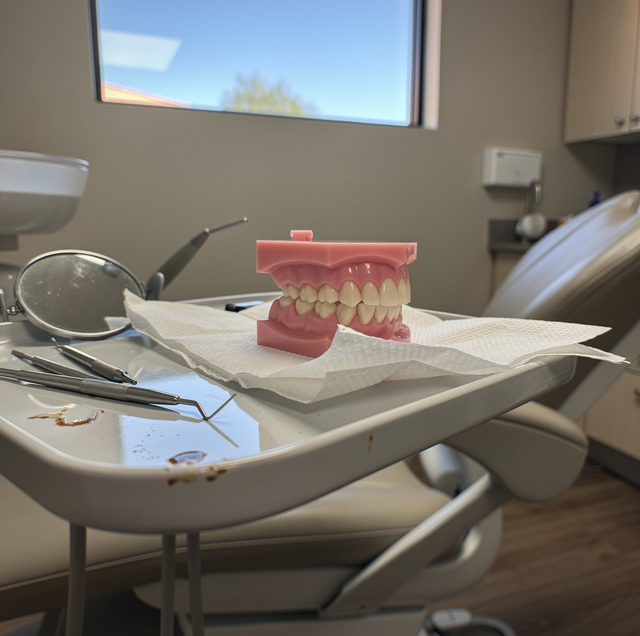
The card the front desk hands back carries more than one date. A denture is made over a series of appointments, and the shape of that series is the part nobody gets walked through in advance. Impressions come first. Measurements and bite records follow it. Somewhere in the middle sits a visit where the teeth are set in wax and looked at before anything is finished.
Delivery day sits partway through the schedule rather than at its end. The weeks that follow ask something of your muscles, the tongue and the tissue underneath, and the office expects to see you again while that is going on. Further out, a denture that seated well can loosen, and the reason usually lies in what is underneath it.
When a Denture Is Made, the Work Is Spread Across Several Visits
The first appointment is mostly gathering. Impressions capture the shape of the ridges and the surrounding tissue, and further records capture how the jaws meet and how far apart they sit when the mouth is closed. None of that produces a finished denture. It produces the information a laboratory needs to build one, which is why the desk books the next date before you leave.
Two routes exist, on different clocks. A conventional full denture is one made and placed after the remaining teeth are removed and the tissues have healed, a wait that may take several months. An immediate denture is one inserted on the same day the remaining teeth come out, with measurements and models taken at a preliminary visit beforehand, and such a denture may need relining or remaking once the jaw has healed.
Which of those applies is a question for an exam, and it changes the number of dates on your card. What stays constant is the order: records, then a look at the teeth before they are finalized, then delivery.
The Try-In Visit: Seeing the Teeth Before Anything Is Finished
Partway through, a denture comes back from the laboratory unfinished on purpose. The teeth are set in wax on a trial base, and the whole thing goes in the mouth so the bite, the midline, the tooth length, and the way the lip sits over them can be assessed while it can still move. Wax can be softened, and a tooth can be shifted. Processed acrylic cannot be changed the same way. The try-in exists so that questions about how the teeth look and meet can be asked while the denture is still wax, rather than after it has been finished.
A try-in is also the visit where a patient gets a say, and it is the one people are least prepared for. A comment that a tooth looks too long, or that the front teeth sit too far forward, is useful there in a way it stops being later. If the way the teeth look matters to you, the try-in is when to raise it, and bringing an old photograph of your own teeth, or a family member, is fair game.
What Changes in the First Weeks of Wearing a Denture?
The early weeks are described plainly in general dental guidance: new dentures may feel awkward for a few weeks until a person becomes accustomed to them, and they may feel loose while the cheek and tongue muscles learn to hold them in place. Minor irritation or soreness is not unusual, and saliva flow may temporarily increase. Those sentences describe dentures in general; what a single mouth does is followed at the appointments after delivery.
Underneath those descriptions sits an ordinary set of adjustments. A denture rests on ridges and tissue that have never carried a load spread that way, and the tissue answers pressure that is new to it. The tongue and the cheeks spent a lifetime working around teeth anchored in bone, and they now have to hold and steady an object that is only sitting there, which is learned by doing. Speech sounds formed by putting the tongue against the palate meet acrylic where they used to meet tissue, so certain consonants land differently until the placement is relearned. Chewing changes too, because a full denture spreads force across the whole ridge, whereas a natural tooth drives it down a single root.
How long any of that takes is the question everyone asks, and no article can answer it for a particular person. General guidance describes a few weeks and nothing narrower. What your own mouth does gets followed at the appointments already on your card.
A sore spot is a reason to be seen. It is information the dentist can use, and reporting it is how it gets fixed, so call the office when you find one.
Two small habits worth raising with your dentist at the next appointment: cutting food smaller than usual, and reading aloud to yourself in the early weeks.
The Adjustment Visits and the Spots They Are Meant to Find
An adjustment is a small, localized work. The dentist finds the exact point where the base is pressing, often by marking the fitting surface, reseating it to see where the mark transfers, and then relieving a small amount of material there. The precision is the whole value. Material taken off the wrong place changes how the entire base seats, which is why a sore spot goes to your dentist and never to a file, a sanding tool, or an over-the-counter reline kit. Professional dental guidance advises against those kits.
Those visits are booked before anyone knows whether they are needed. Follow-up appointments with the dentist are generally needed after a denture is inserted so the fit can be checked and adjusted, and where a problem persists, particularly irritation or soreness, the advice is to consult your dentist. A denture leaves at delivery in the condition a laboratory could give it. Fitting it to a living mouth happens after that.
Years Later: Why a Denture That Fit Can Come Loose
A denture is rigid. It was made against the ridge as that ridge stood on the day of the impression, and the bone and tissue under your denture can change in the years afterward, which is why fit is treated as something to be re-checked at set intervals. Professional guidelines for the care and maintenance of complete dentures put an annual check against exactly that: patients who wear dentures should be checked annually by the dentist, prosthodontist, or dental professional for maintenance of optimum denture fit and function, for evaluation for oral lesions and bone loss, and for assessment of oral health status.
Signs a denture may need relining or replacing include chronic irritation beneath the base, a denture that no longer fits or has cracked, and needing adhesive to eat or using it more than once a day. Adhesive is no remedy for an ill-fitting denture. Jennifer Fineberg, DDS, has practiced general and family dentistry since 1997, and reading those signs is ordinary work at your checkup.
The denture itself is the same object it was on delivery day, whatever has happened under it. Adjustment visits and a later reline are the plan, not the sign that something failed.
Frequently Asked Questions
An immediate denture is placed on the same day the last teeth come out, so nobody is left without teeth while the jaw heals. It may need to be relined or remade once your jaw has healed, which is part of why your card carries dates beyond delivery day.
It depends on the kind. A full upper denture relies on close contact with the tissue it was made against, one reason fit matters. A lower denture has less surface to work with and leans on the muscles of your tongue and cheeks. A partial uses your own remaining teeth as anchors, and your dentist says which applies.
Soon, and by phone rather than by waiting for the next visit. A sore spot marks where the base is pressing, and the fix is a localized adjustment made by the dentist. Nothing about it calls for filing, sanding, or trimming at home, and the standing advice on persistent soreness is to consult your dentist.
A full upper denture usually does, because that surface is part of how it holds. Some people notice food tasting flatter or feeling less hot or cold at first, since the palate does some of that sensing. If it bothers you, say so at a follow-up; your dentist can tell you what your case allows.
Yes. Relieving a pressure point removes a small amount of acrylic from the fitting surface, and it does not grow back, which is why the work is done in small increments, with checks between them. It is also why the same tool in your hands at home is different from the one in your dentist's.
Part of owning one. A reline refits the base of the denture to the ridge as it now is, and the teeth and the rest of your denture stay put; it is a procedure to refit the base when dentures no longer fit as well as they once did. Your dentist judges whether your denture is a candidate.
Schedule a denture consultation — the appointment sequence gets planned around your own mouth, starting with a first visit. Jennifer Fineberg DDS welcomes patients in Glendale, Peoria, and the West Valley. Call (623) 362-2550.
