Dental Sealants and Fluoride for Kids: Worth It, and When?
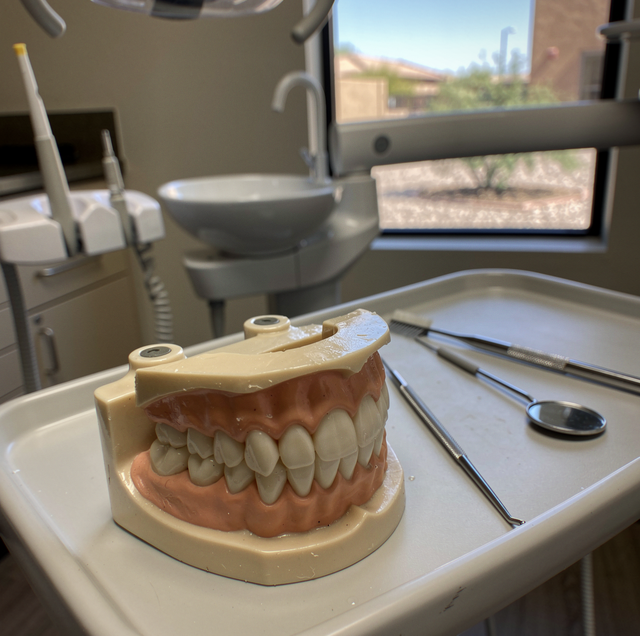
A first permanent molar arrives at the back of a child's mouth at around the sixth birthday. It comes in behind the baby teeth rather than in place of one, so nothing falls out to mark the occasion and you may never notice it happen. Its chewing surface is not flat: the cusps meet along a pattern of pits and narrow fissures.
So, at a check-up, you are told those grooves are worth sealing, and a fluoride treatment is going on, too. Whether both are worth it is fair for you to ask. Part of the answer is here, based on national and professional dental health guidance about children as a group. The rest waits until your child's teeth are under a light.
Where the Cavities in a Young Child's Mouth Tend to Sit
The molars at the back do most of the grinding, and their chewing surfaces carry that pattern of pits and fissures where the cusps meet. Plaque collects in the deeper ones, and a brush head passing over the opening does not reach the bottom. Where the problem is concentrated, national dental health data are specific: sealants prevent about 80% of cavities over two years on the back teeth, where roughly 9 in 10 cavities occur.
A sealant covers that surface and nothing beyond it. The coating sits on the chewing surface of the back teeth, which leaves the smooth outer faces, the contact points between neighboring teeth, and the whole front of your child's mouth untouched. The pairing in the title is a geometric arrangement first: a small, high-risk area gets a physical cover, and the other surfaces are looked after by other means.
What the 80 Percent Figure Does and Does Not Cover
The 80 percent figure comes with three conditions. It is measured over two years rather than across a childhood. It applies to the back teeth, not to every surface in a mouth. And it is drawn from children studied as a group, which makes it a description of what happened to a population, not a forecast for your child or any other individual member of it. Detached from those three conditions, the number turns into a promise nobody made. Kept with them, it still means something substantial: over that window, in the location where nine of every ten cavities form, four-fifths of them did not.
The comparison alongside it is easier to picture than a percentage: school-age children (ages 6 to 11) without sealants have almost 3 times as many cavities in the first molars as children with sealants. Note how narrowly that comparison is drawn. It names one age band, and it names one pair of teeth, the first molars, which arrive around your child's sixth birthday.
Uptake is the other quantity worth knowing, and it is lower than the first two figures might suggest: four in ten children (42%) aged 6 to 11 have dental sealants on permanent teeth. Common enough to be routine, then, and nowhere near universal, which is one reason a parent can reach a six-year molar appointment having never had the word raised with you before.
What Placing a Sealant on a Molar Involves at the Chair
The appointment goes step by step, and it begins with preparing the surface: your dentist will clean and dry your tooth before applying an acidic gel to it. The gel roughens the enamel so the coating grips it. That gel is then rinsed away, the tooth dried a second time, the sealant flowed into the grooves, and a blue light hardens it.
One use of the material is less obvious, and it changes what a parent might assume a sealant is for: sealants can be used over areas of early decay to prevent further damage to the tooth, and because some sealants are clear, the dentist can keep an eye on it to make sure the sealant is doing its job.
Whose Call Is It That a Particular Tooth Gets Sealed?
The dentist's, and the reason is structural rather than a matter of professional territory. Sealing turns on findings only an examination produces: which permanent teeth have come through, how deeply the fissures on each one run, whether the surface is sound, and what the rest of the mouth already shows. An article can report what a public health agency and a professional body have published. It cannot look into a mouth.
Timing is the part a parent can usefully hold in mind, because it is published in general terms: first molars appear around age 6, and second molars break through around age 12. Sealing those teeth as soon as they come through can keep them free of cavities from the outset. Those ages are typical arrivals across many children, not a schedule any one child is obliged to keep.
Which leaves a clean boundary. Nothing written here can tell you whether your child's molars are through yet, whether their fissures are deep or shallow, or whether a sealant belongs on any one of them this year. Those questions have answers, and the answers live in a chair under a light.
Where a Professionally Applied Fluoride Treatment Fits Alongside a Sealant
Fluoride applied at the visit is the second thing usually offered, and preventive care for children here includes cleaning and fluoride treatments, along with nutrition and diet recommendations. A coating physically seals the grooved chewing surfaces of the back molars, while fluoride goes across the teeth generally. This in-office treatment is often recommended for children to prevent early cavities.
The line that must not be crossed at a keyboard is the dose. Whether a child should have fluoride drops, tablets, a prescription rinse, or any supplement beyond what a dentist applies in the office is a clinical judgment, and it belongs to the dentist who knows what fluoride your child already gets, or to your child's physician. It is not a judgment for you to make from an article, a label, or a neighbor.
What This Answers, and What It Leaves for the Examination
At the level of children as a group, the question in the title has a published answer, and a reasonably strong one. A public health agency prints the size of the effect, its window and its location. A professional body prints the eruption ages, the chairside procedure, and the fact that the coating is checked and renewed over time. None of those sources says a word about one child, and none of them was meant to.
So take the group answer as far as it goes and no further. If your child's six-year molars have come through and nobody has raised sealants with you, the useful question at the next appointment is not whether sealants work in general, because national data has already answered that. Ask which of your child's back teeth are through, what their chewing surfaces look like under a light, and whether a sealant, a fluoride application, both, or neither suits those teeth now.
Frequently Asked Questions
Yes. Sealants are no substitute for brushing and flossing, but they can help prevent cavities and may even stop early decay from progressing to a full-blown cavity. Every surface a sealant never covers, you clean as you always did.
Several years, and the check is built into visits you already have. Sealants often last several years before needing to be reapplied, and during your regular dental visit, your dentist will check the condition of the sealant and reapply it as needed.
It is a thin, protective coating, made from plastic or other dental materials, that adheres to the chewing surface of the back teeth, sometimes described as a coating painted onto the molars. You will not see it once it is on your child's tooth.
More than the two you came for. The practice's pediatric dentistry page reads: "There are several services, such as guidance on brushing and flossing, fluoride application, routine X-rays, referrals to orthodontists or dental specialists, regular teeth cleanings, sealants, mouth guards, and merely identifying possible health issues." Some of your child's care goes elsewhere.
They do, and that age group is counted separately from the six-to-eleven figure you read above: among adolescents aged 12 to 19, 48% have dental sealants on permanent teeth. That band lines up with the second molars, which arrive around age 12, years after the first pair your child already has.
Parents ask this often enough that it is worth answering directly, and in full rather than in summary: yes, there is a tiny amount of BPA in sealants but not enough to cause you or a loved one any harm. In fact, you get more exposure to BPA simply by touching a receipt, using cosmetics, or coming into contact with dust. Anything past that answer is a question for the dentist placing the material in your child's mouth.
Book your child's next preventive appointment — an examination is the only place the sealant and fluoride question gets answered for one child's teeth. Jennifer Fineberg DDS welcomes patients in Glendale, Peoria, and the West Valley. Call (623) 362-2550.
