Dental Implant Consultation in Glendale: What to Expect
You lost a tooth, or you just found out one has to come out, and somewhere in the conversation, the word "implant" came up. Now you are wondering whether that option is even open to you. It is a fair question, and a common one, because implants are not a one-size-fits-all solution for everyone. Whether an implant is a good fit depends on a handful of things a dentist can actually check: the bone under the gap, the health of your gums, how your body tends to heal, and whether you are ready to care for the result. None of that can be settled from a search bar. What follows is a plain guide to what generally makes a good candidate, so you walk into an exam knowing what is being weighed and why.
What a Dental Implant Actually Is
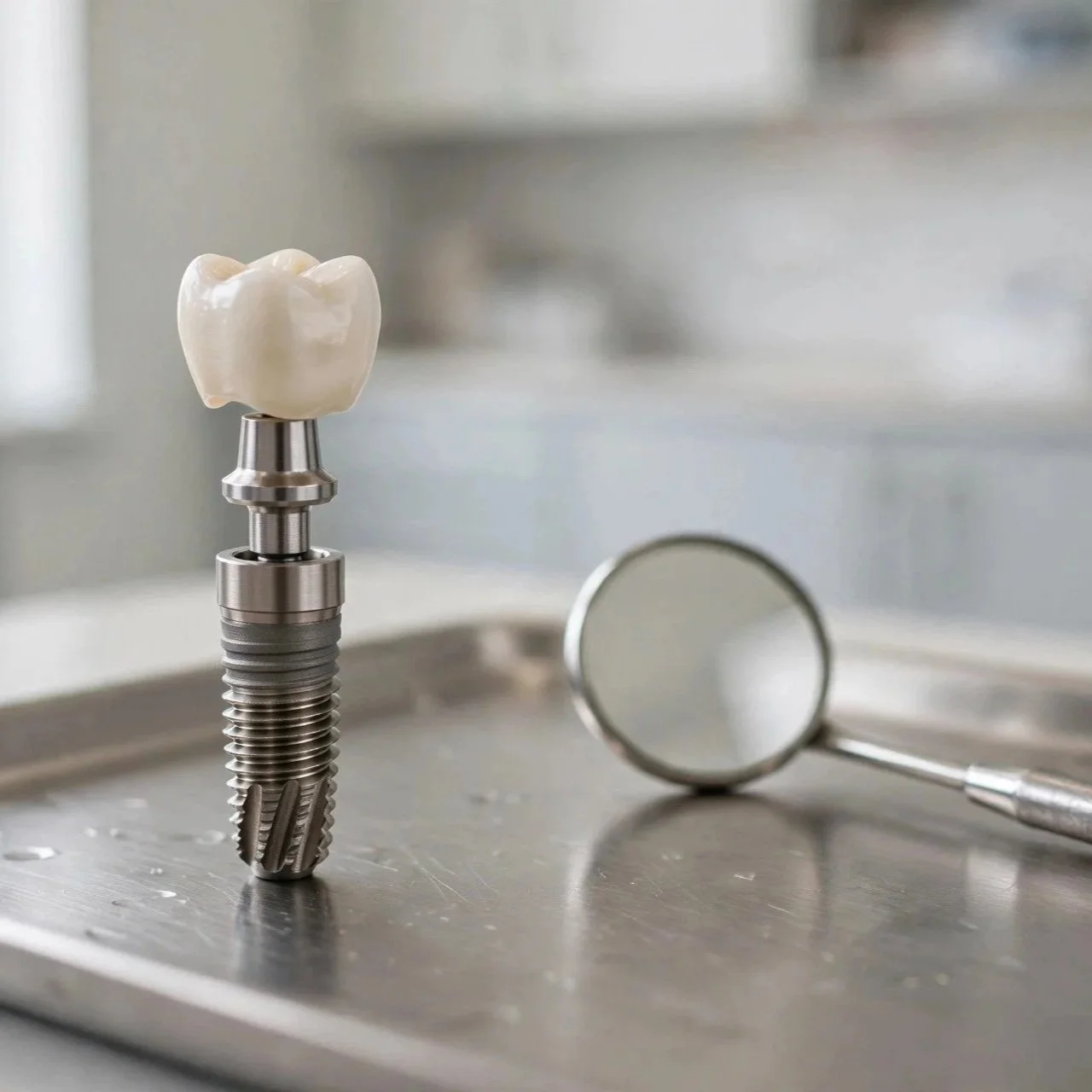
Before the candidacy question makes sense, it helps to know what you would be signing up for. A natural tooth has two parts: the crown you see and the root anchored in bone. When a tooth is gone, an implant replaces it. A small titanium post is placed into the jawbone to stand in for the root. Titanium is used because bone tends to bond to it, a process called osseointegration, where living bone grows against the surface of the post and locks it in place over a period of healing.
Once that post is stable, a connector called an abutment is attached, and a custom crown is fitted on top to restore the tooth's appearance and function. So an implant is really a system of three parts working together: the post in the bone, the abutment, and the crown restoration. That structure is also why the foundation matters so much. Everything above the gumline is only as solid as the bone and tissue holding the post.
What Generally Makes a Good Candidate
Most people who are missing a tooth or facing an extraction have options, but a dentist considers several factors together rather than any single pass-or-fail test. These are the ones that come up most often.
Enough healthy jawbone: The post needs a certain amount of bone to sit in and bond with. When a tooth has been missing for a while, the bone that once supported it can shrink, since it no longer gets the stimulation of chewing through that root. An exam checks whether there is sufficient height and width of the bone at the site, usually using imaging that measures it precisely.
Healthy gums: Firm, healthy gingiva around the site gives the implant a clean, well-supported home. Active gum disease works against that, because the same infection that loosens natural teeth can undermine an implant. That does not always mean a hard no. Gum problems can often be treated and stabilized first, then candidacy is reconsidered.
Overall health and healing: An implant relies on your body healing bone and tissue around the post, so general health matters more than many people expect. Conditions that slow healing, such as uncontrolled diabetes, can make the process less predictable, and certain medications affect bone and healing, too. Smoking is a well-known factor because it reduces blood flow to the gums and can interfere with how the site knits together. Managing these does not necessarily rule anyone out, but they are part of an honest conversation about timing and expectations.
Being done growing: Implants are generally for adults whose jaws have finished developing. Placing a post in a jaw that is still growing can leave it out of position later, as the surrounding bone and teeth continue to shift. This is why implants are typically discussed for grown patients rather than teenagers.
A commitment to care: An implant crown does not decay the way a natural tooth can, but the surrounding gum and bone still need daily brushing, flossing, and regular checkups. Candidates who are ready to keep up that routine give the result its best chance to last.
Reading that list, you may recognize yourself in some points and wonder about others. That is normal, and it is exactly what an exam sorts out. No factor here is meant to be self-diagnosed into a yes or a no.
When the Jawbone Needs Building First
A thin or shrunken ridge of bone is one of the most common reasons someone assumes implants are off the table. Often they are not. Dentistry has ways to rebuild a site so it can support a post.
Bone grafting adds material to a site that has lost volume, giving new bone something to grow into during the healing period before an implant is placed. In the upper back jaw, where the sinus sits close above the teeth, a related procedure, sometimes called a sinus lift, can create room and bone height for a post. These steps add time to the overall plan and are not needed for everyone, but they widen the door for people who were told years ago that they lacked the bone for implants. Whether grafting makes sense for a given site is one of the things imaging and an exam are there to answer.
How the Process Generally Works
You do not need a surgical play-by-play to make a decision, but a high-level map helps. In broad strokes, implant treatment typically progresses through four stages.
It starts with an evaluation: a review of your health history, an exam of the gap and surrounding teeth, and imaging that shows the bone and nearby structures. This is where candidacy is actually decided, and a plan is shaped. Next comes placement, when the titanium post is set into the bone. Then there is a healing period, the osseointegration phase, where bone bonds to the post over the course of a few months in most plans. Finally, the restoration stage attaches the abutment and the crown, completing the tooth.
One honest note about placement. Setting the post is a minor surgical procedure, and depending on the case, it may involve more involved bone work or oral surgery. This practice does not perform oral surgery in-house. When a case calls for it, the plan is coordinated with a trusted specialist for the surgical portion, and the office stays involved to ensure the pieces fit together. Many people find it reassuring, rather than worrying, to know that the surgical part is handled by someone who does it day in and day out.
Implants Are Not the Only Way to Replace a Tooth
Implants get a lot of attention, but they are one option among several, and the best choice depends on your mouth, your health, and what you want. A fixed bridge, which uses the neighboring teeth to anchor a replacement, can be a good fit in some situations. A removable partial or full denture may suit others, especially where several teeth are missing. Each approach has its own trade-offs in how it feels, how it is cared for, and what it asks of the surrounding teeth and bone.
This is not a decision to make from an article. A dentist weighs the condition of the neighboring teeth, the amount of bone, your general health, and your preferences, then walks you through which options actually apply to your situation. Sometimes an implant is the clear standout. Sometimes a bridge or denture serves you better. The point of an exam is to match the solution to the person, not to steer everyone toward the same answer.
Why an Exam Is the Only Way to Know
Everything above describes what dentists generally look for. It is not a verdict on your own mouth, because the factors that decide candidacy are physical things that have to be measured and seen: the bone at the site, the health of your gums, the neighboring teeth, and your health history read together. Two people with the same missing tooth can land in different places once the imaging is in.
If you are missing a tooth or preparing for an extraction and want to know whether an implant is a realistic option for you, the next useful step is a plain evaluation. A dentist can examine the site, review your history, and lay out the choices that actually fit, including whether groundwork like bone grafting would come first. You leave with a clear picture instead of a guess.
Frequently Asked Questions
Not automatically, but it usually has to be addressed first. Active periodontal infection is one of the main risk factors for later problems around an implant, including gum inflammation known as peri-implant mucositis and a more advanced form, peri-implantitis, that affects the supporting bone. Many people move forward with implants after their gum health is treated and brought under control, which is why a periodontal check is part of the evaluation rather than an afterthought.
It varies widely because so much of the timeline is healing, not chair time. After a post is placed, the osseointegration period often runs a few months before the crown goes on, and cases that need bone grafting or a sinus lift first can add several more months for that site to heal before the implant is even placed. Simpler cases move faster. An exam is what turns this general range into a realistic timeline for your specific plan.
There is no standard upper age limit; general health and healing matter far more than the number itself, and many older adults are strong candidates. The more relevant boundary is on the young end. Because a still-developing jaw keeps changing, implants are generally held off until growth is complete, which a dentist may confirm with imaging or growth records rather than birthday alone.
Generally no. The titanium used in implants is non-magnetic and contains only a very small amount of metal, so it typically does not trigger walk-through security scanners or interfere with an MRI. If you are scheduled for imaging, it is still worth telling the technician about any dental work, but implants are not usually a concern, the way some larger metal hardware can be.
Often yes, though grinding, known as bruxism, puts extra force on any tooth or restoration, including an implant crown. A dentist may recommend a custom night guard to protect the work while you sleep and reduce that strain. It is a manageable factor rather than a disqualifier, but it is worth raising during the evaluation so it can be planned around.
Bone tends to shrink in an area that no longer has a tooth root stimulating it, a gradual loss called resorption that can start within the first year and continue over time. That is part of why a long-empty site sometimes needs grafting before an implant, and why leaving a gap can also let neighboring teeth drift. Replacing the tooth, by whatever method fits, helps keep the surrounding structure more stable than an open gap does.
Book an implant evaluation — get a clear read on your options and next steps. Jennifer Fineberg DDS welcomes patients in Glendale, Peoria, and the West Valley. Call (623) 362-2550.
