Crown or Veneer Fell Off? Emergency Dental Care in Glendale, AZ
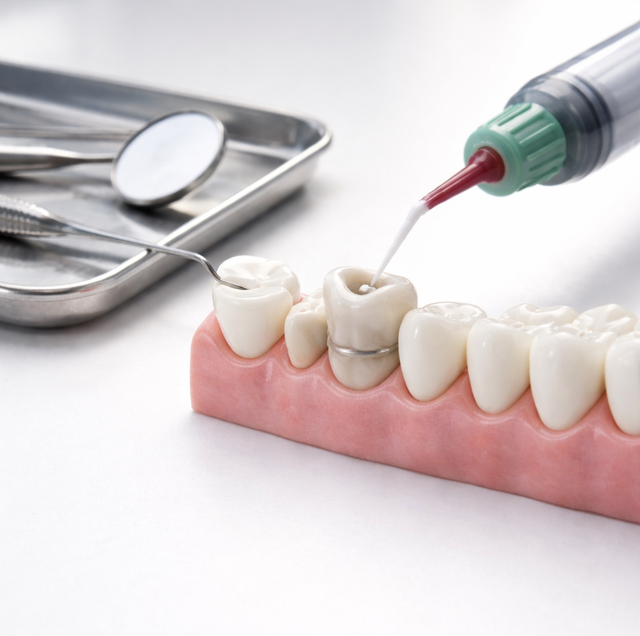
It usually happens mid-bite, on something soft that had no business dislodging anything: a bagel, a caramel, a forkful of pasta. One second the tooth feels normal, the next there is a hard little object loose in your mouth and a smooth surface where the tooth used to be. A crown or veneer coming off is startling, but it is rarely a true emergency, and what you do in the next few minutes matters more than the fact that it happened. The steps below are about getting safely through the time between now and your appointment, not about fixing the tooth yourself.
First Steps: What to Do Right Now
Work through these in order. None of them require anything you would not already have at home.
Stay calm and clear your mouth: Stop chewing and gently move the loose piece to the front of your mouth with your tongue, then take it out with clean fingers. The goal is to get it out before you swallow it or accidentally bite down on it.
Keep the crown or veneer, and keep it safe: This is the single most useful thing you can do. If the restoration is intact, your dentist can often clean and re-cement the same piece rather than make a new one. Rinse it under cool (not hot) water, then put it somewhere it will not vanish: a small pill container, a contact-lens case, or a labeled zip bag. Do not wrap it in a tissue, the classic way these get thrown out by mistake.
Rinse your mouth with warm water: A gentle swish clears away debris and lets you feel what is going on. If the area is tender, a mild warm saltwater rinse (about half a teaspoon of salt in a cup of water) is soothing and helps keep the exposed tooth clean.
Look at what is left, but do not dig at it: The tooth underneath a crown is a shaped-down "prep," sometimes with a small post in the center. It may feel rough, sharp, or noticeably smaller than a whole tooth. That is expected. Leave it alone beyond keeping it clean; poking at it with a toothpick or fingernail only risks irritation.
Call your dentist for a prompt appointment: Explain that a crown or veneer came off or broke, and whether you have the piece. Most offices will fit this in quickly, and bringing the restoration gives them the best chance of reusing it.
If You Must Temporarily Reseat a Crown
Reseating is optional. Many people are more comfortable leaving the tooth bare and going straight to the dentist, especially if the appointment is soon. But if the exposed prep is sharp against your tongue, or the visit is a day or two out, a crown (not a veneer) can sometimes be held in place briefly.
Use only a material meant for this. An over-the-counter temporary dental cement kit, sold at most pharmacies for exactly this purpose, is the intended product. In a pinch, a thin smear of denture adhesive or a dab of plain petroleum jelly can hold a crown loosely for a short time. Make sure the inside of the crown is clean and dry, seat it the way it naturally wants to go, and bite gently to check that it sits flush and your bite feels even. If it will not seat fully, stop and leave it out rather than force it.
Never use household glue, superglue, or any permanent adhesive. These are toxic in the mouth, can damage the tooth and the restoration, and can lock a crown into a wrong position that a dentist then has to grind off, sometimes sacrificing a crown that could have been reused. Anything you place is a very short-term hold to get you to the office, not a repair.
Protecting the Exposed Tooth Until Your Visit
If you leave the tooth bare, a little care keeps it comfortable and out of trouble. A sharp edge, whether on the tooth or on a broken piece of crown still attached, can be softened with a small ball of dental wax pressed over it, the same orthodontic relief wax sold for braces. Chew on the opposite side so the exposed prep is not taking bite force, and lean on softer foods for a day or two: eggs, yogurt, pasta, well-cooked vegetables. Skip anything sticky (caramel, taffy, gum), crunchy, or very hard, since those are what pull restorations loose and can snap a fragile prep.
Keep brushing the area, just gently. An exposed prepped tooth is often dentin, the softer layer beneath enamel, so a soft brush and continued flossing actually protect it. That same dentin is why the tooth may be sensitive: it contains microscopic tubules that carry sensation toward the nerve, so cold water, cold air, and hot drinks are common triggers. Keeping food and drink close to room temperature spares the tooth, and a sensitivity toothpaste made for exposed dentin can take the edge off if the wait runs longer than a day. Some sharpness is normal and does not automatically mean something is wrong with the nerve.
Why Veneers Are Different
A veneer is a thin shell bonded to the front of a tooth, and it behaves differently from a crown. Veneers are held by a precise bonding process, not by cement you can approximate at home, and the fit is too delicate to reseat with a temporary product. Trying to stick one back on usually smears the bonding surface and can chip the thin porcelain, which makes it harder for the dentist to reuse. The better move is to save it flat in a container, avoid biting or tearing food with that front tooth, and get it professionally re-bonded. If a veneer chipped or cracked rather than lifting off whole, keep whatever pieces you have and bring them along.
What to Avoid, and When It Is More Urgent
Do not swallow the restoration, and be careful not to fall asleep with a loose crown in your mouth. A swallowed crown usually passes without harm, but a piece breathed into the airway is a medical matter; if you inhale one and start coughing or feel short of breath, treat that as urgent and seek care right away. Do not try to file or reshape the tooth yourself, and do not leave a bare prep for weeks, since it can decay and nearby or opposing teeth can drift enough that the original crown no longer fits.
Call promptly, and describe it as more pressing, if you have throbbing or spontaneous pain, swelling in the gum or face, a bad taste or discharge near the tooth, or a fever. Those can point to an irritated nerve or infection under the restoration, a separate problem from the crown simply loosening, and one your dentist will want to evaluate without delay.
What the Dentist Will Likely Do
Once you are in the chair, the path is usually one of two. If the crown is intact and the tooth beneath it is healthy, the dentist cleans out the old cement, checks the fit and your bite, and re-cements the same crown, often in one short visit. If the crown is cracked, if decay has formed under it, or if the tooth has changed shape, a new restoration may be needed, which usually means a fresh impression or scan and a temporary crown while the permanent one is made. For a veneer, an undamaged shell is cleaned, re-etched, and re-bonded, while a broken one is replaced. What the tooth actually needs is something only an exam can settle, which is why the loose piece and the bare tooth both belong in front of a dentist rather than a bathroom mirror.
The Calm Version of the Next Few Hours
A crown or veneer coming off is a common, fixable event. In order: get the piece out, save it somewhere safe, rinse, protect the tooth from sharp edges and hard food, and call for a prompt visit. Reseating a crown is optional and only ever temporary; use a product made for it, never glue. Veneers wait for the dentist, and any warning sign like pain or swelling means sooner.
Frequently Asked Questions
Yes, and fairly soon. A crown often lifts off cleanly because the cement simply wore out, with no nerve involvement, which is why it does not hurt. The risk is not pain; it is time: an exposed prep can decay, and more commonly the teeth on either side and above can shift within a couple of weeks. If they move, the original crown may no longer seat, turning an easy re-cement into a full remake. Painless is good news for the tooth, not a reason to wait.
It can be. Some crowns on heavily restored or root-treated teeth are anchored by a post that sits down inside the root. If the whole post came out with the crown, more of the tooth's internal structure is now exposed, and reseating it at home is not advisable because the post has to be positioned precisely. Keep the crown and post together in one container, avoid that tooth, and mention the post when you call, since it affects how the visit is planned.
A tiny amount of toothpaste can create light, brief suction to keep a crown from clicking around, but it is not an adhesive and will not hold under a real bite, so treat it only as a stopgap for an hour, not overnight. A proper temporary cement kit holds far better if you need the crown seated before your appointment. Whatever you use, if the crown does not drop fully into place under gentle pressure, leave it out; a half-seated crown throws off your bite and is easy to swallow in your sleep.
A root-treated tooth will not feel cold or hot the way a live tooth does, but losing its nerve does not make it stronger; it tends to be drier and more brittle, which is often why it was crowned in the first place. The remaining walls can chip or split under hard biting even without any sensation to warn you, so "no pain" here is not protection. Stay off that side, avoid hard and sticky foods, and get it recovered promptly.
Usually not, but bring every piece anyway. A crown that fractured, or a porcelain-fused-to-metal crown that lost its porcelain and left the metal showing, generally cannot be re-cemented as one solid unit. The dentist still benefits from seeing the pieces to understand how it failed, check the tooth beneath, and match shape and shade for a replacement. If a sharp remnant is still stuck to the tooth, cover it with dental wax until your visit.
Think days, not weeks, though the pace depends on which tooth it is. A bare lower molar tends to move fastest, because the upper tooth it once met now bites into open space and can over-erupt down into the gap while the prep itself drifts, so the window there is shorter than for a tooth with little opposing contact. The practical tipping point is this: while the prep still fits its old crown, a clean re-cement is likely, but once neighboring or opposing teeth have shifted even slightly, the crown no longer seats and a remake becomes the realistic path. Keeping the area clean and off hard food buys time; leaving it open for weeks usually spends it.
Lost or broke a crown or veneer and want it looked at quickly — call to arrange a prompt exam with Dr. Fineberg. Jennifer Fineberg DDS welcomes patients in Glendale, Peoria, and the West Valley. Call (623) 362-2550.
