The choice between a tooth-colored filling and a silver one turns on three things a dentist can see in the chair: where the cavity sits, how large it is, and whether the tooth can be kept dry while the material goes in. Appearance counts, and so does how you feel about metal in your mouth, but those preferences work inside the limits the tooth sets. The two materials hold onto a tooth in different ways, and that difference drives the trade-offs that follow. Your dentist will evaluate the cavity itself before suggesting either material.
What Each Filling Is Made Of
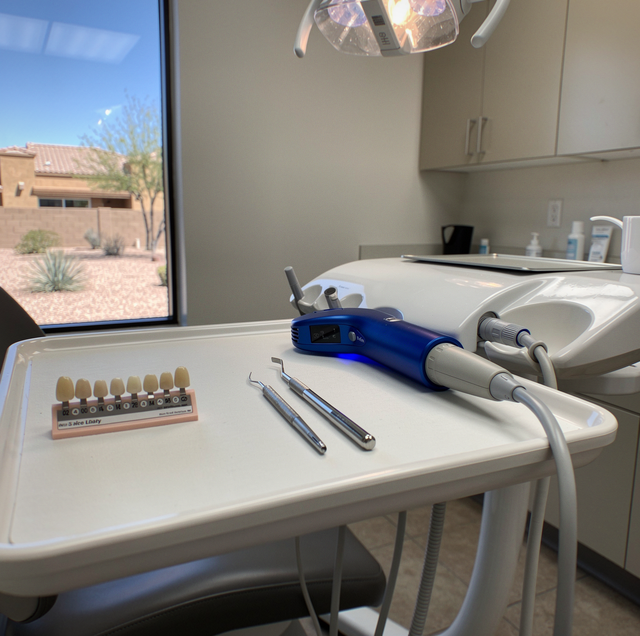
A tooth-colored filling is composite resin: a plastic resin base packed with fine particles of glass, silica, or quartz. The filler provides the material with stiffness and wear resistance, while the resin carries the shade. It goes into the tooth soft, is sculpted to the shape of the chewing surface, and hardens under a blue curing light.
A silver filling is dental amalgam. It starts as a powdered alloy of silver, tin, and copper, sometimes with a little zinc, mixed with liquid elemental mercury. The mercury reacts with the alloy powder, binding it into a solid metal mass that sets inside the tooth. By weight, mercury makes up roughly half of the finished filling, and that fact is where the questions about amalgam begin.
Both are in current use, and the table below compares them row by row.
| Tooth-colored (composite) | Silver (amalgam) | |
|---|---|---|
| Material | Resin with glass or quartz filler, matched to your shade | Silver, tin and copper alloy bound by mercury |
| How it bonds or holds | Glued to etched enamel and dentin through an adhesive layer | Locked in by undercuts and walls cut to hold the metal |
| How much tooth is removed | The decay and weakened enamel, with little else | The decay, plus sound tooth cut away for bulk and a locking shape |
| Appearance | Blends with the enamel around it | Metal gray; can give the surrounding tooth a gray cast over time |
| Where it holds up | Small to moderate cavities in a tooth that can be isolated from saliva | Heavy chewing surfaces and spots where saliva or bleeding is hard to hold back |
| Sensitivity after placement | Resin shrinks slightly as it cures, which can strain the walls and leave a tender bite | Conducts hot and cold; the edge can start with a hairline gap that corrosion at the margin can gradually seal |
| How it wears and fails | Surface wear, chipped corners, and a bond that can break down at the edge | Edge breakdown and cracks in thin tooth walls beside a large filling |
How Each One Holds On to the Tooth
Composite is bonded. Before it goes in, the dentist treats the prepared surface with a mild acid that roughens the enamel on a microscopic level, then paints on an adhesive that soaks into those textures and hardens. The composite fuses to that adhesive layer. Because the bond holds, the dentist needs to remove only the decay and any enamel it has undermined, and the cavity can keep whatever shape the decay left behind.
The catch is moisture. A bond needs a clean, dry surface, and a trace of saliva or blood at the wrong moment can weaken it. Dentists isolate the tooth with cotton rolls, suction, or a thin rubber sheet called a dental dam, and build up the composite in layers, curing each layer before adding the next. That layering adds steps to the appointment.
Amalgam is not glued at all. It stays in by mechanical retention: the dentist shapes the cavity so its walls lean inward toward the opening or carry small undercuts, and once the metal is packed in and sets, it cannot lift out. Metal also needs a minimum thickness to resist fracture under biting force, so the preparation is cut deep and wide enough to give the filling bulk even where the decay itself was shallow. That is why a silver filling removes more healthy tooth than a bonded filling placed in the same cavity.
Where in the Mouth Each Material Works Best
Two pressures act on any filling: chewing force during its life and moisture during its placement.
Front teeth and the visible sides of premolars favor composite with little debate. The tooth is easy to keep dry there, and a metal filling there would show when you talk or smile.
Back teeth are where the choice gets closer. A small or moderate cavity on a molar that the dentist can isolate well is a reasonable composite case, and a well-placed composite can hold up under chewing on those teeth. Amalgam keeps a place on back teeth in two situations: a large cavity on a heavy chewing surface, and a cavity that reaches below the gumline or sits so far back that keeping it dry for a bond is not realistic. Amalgam tolerates a damp field during placement in a way resin does not, and it packs into the cavity in one pass, which helps when a patient cannot hold still for long.
Your bite belongs in the picture too. Heavy clenching or grinding loads fillings beyond the force of ordinary chewing, and your dentist factors that load into the material chosen for a molar.
The Mercury Question, Answered Calmly
The mercury in a silver filling is not free liquid mercury sitting in the tooth. It is chemically bound with silver, tin, and copper into a solid alloy. A set amalgam does give off very small amounts of mercury vapor, with the highest release while a filling is being placed or drilled out, and trace amounts during chewing or grinding.
For the general adult population, the small amounts of amalgam that are released are not an established cause of illness. The mercury in fillings is also a different form from the methylmercury people hear about in fish: filling mercury is elemental, while methylmercury is an organic compound the body absorbs through the gut.
Some people are in a different position. If you are pregnant, planning a pregnancy, or nursing, if you have a kidney or neurological condition, or if you have reacted to mercury or other metals in the past, tell your dentist before a filling is planned. The same goes for a known sensitivity to resins or acrylics, which bears on tooth-colored materials. Those details belong in the material conversation, and your dentist will talk them through with you.
Materials Beyond Composite and Amalgam
Composite is one of several tooth-colored materials. Glass ionomer is a tooth-colored cement made from powdered glass and an acid that sets together in the tooth. It bonds chemically to the tooth, tolerates a small amount of moisture during placement, and releases fluoride into the surrounding enamel over time. It wears under heavy chewing, so it suits spots that take little bite load: cavities on root surfaces near the gumline, some baby teeth, and temporary fills. A resin-modified version adds some of the composite's strength while maintaining fluoride release.
Other materials exist for repairs too large for a direct filling to handle well, and your dentist can discuss them after examining the tooth, including a crown when a large old filling has left the walls thin and cracking.
Replacing Old Silver Fillings: When It Makes Sense
An intact silver filling with sound edges and no decay around it does not need to come out because it is silver. Drilling it out produces a burst of vapor that leaving it alone would avoid, and each replacement takes some tooth with it, because the dentist cuts back to clean, sound walls before the new filling goes in.
Reasons that do justify replacing one:
- Decay at the edge: new decay starting along the margin, seen on an X-ray or felt with an instrument during the exam.
- A broken or open margin: the edge has worn down or chipped, leaving a ledge or gap where plaque collects.
- A fractured filling or tooth: part of the filling has broken off, or a crack has formed in the tooth beside it.
- Symptoms traced to that tooth: pain on biting or a lingering ache that the exam links to that filling.
- Appearance: a silver filling that shows when you smile or talk, when you would prefer a tooth-colored one. That is a legitimate choice to discuss, as long as the tooth suits the replacement material.
Floss that catches, frays, or shreds at the same spot beside an old filling deserves a mention at your next checkup. A rough or open edge can snag floss and trap food there well before the tooth hurts.
How Your Dentist Decides With You
The choice is a conversation between what the tooth needs and what you prefer. At the exam, your dentist looks at the size and depth of the cavity, which surfaces it involves, whether its edge reaches below the gumline, how much load that tooth carries, and whether it can be kept dry during placement. X-rays add what the eye cannot see, such as decay between teeth.
Then you bring your side: how much the look of a back filling matters to you, any concern about mercury or resin, relevant medical history, and whether a long appointment would be hard for you. When both materials are sound options for a given tooth, the choice can be yours. When only one is, your dentist should explain why in terms of that tooth, its size, its location, and its bite.
Frequently Asked Questions
Two different metals in saliva form a small electrical circuit. When a scrap of aluminum foil, a fork tine, or a metal crown on a neighboring tooth touches an amalgam filling, a brief current passes between them, and the nerve registers a sharp zap. This is called galvanic shock. It passes in a moment, but a filling that zaps each time it meets an opposing metal crown is worth pointing out to your dentist.
It depends on the material. A composite is hardened by the curing light before you leave the chair, so the chewing limit is the numbness, not the filling. An amalgam keeps setting for hours and reaches full strength over roughly the first day, so your dentist may ask you to avoid hard foods on that side until then.
Sometimes. Because fresh composite bonds to existing composite, a dentist can roughen a small chipped or worn area, apply a bonding agent, and add new material, leaving the rest of the filling in place. That keeps more of your tooth than drilling the whole filling out. Repairing an amalgam is a narrower option, and the dentist chooses between repair and replacement after assessing the damage.
Yes. Amalgam blocks X-rays, so it appears as a solid bright white shape on the image. That makes the outline of the filling easy to see, but the metal can also hide a small area of decay directly beneath it. Composites show up on X-rays with brightness that varies from one material to another.
The shade is matched when the filling is placed, but composite can pick up surface stain from coffee, tea, red wine, and tobacco, and its edges can darken first. Your natural teeth can also shift in shade over the years. A hygienist can polish away surface stain at a cleaning, and a deeper color change that bothers you is a reason to ask about refinishing or replacing the filling.
With a high-speed drill cooled by a steady water spray, while high-volume suction pulls the spray, debris, and vapor away from your mouth. Cutting the filling into sections and lifting them out, rather than grinding the whole thing down, limits the heat and vapor produced. Once the metal is out, the dentist removes any decay beneath it and prepares the tooth for the new restoration.
Ask which filling material suits your tooth — an exam weighs the cavity's size, location, and bite against how you want the repair to look. Jennifer Fineberg DDS welcomes patients in Glendale, Peoria, and the West Valley. Call (623) 362-2550.